What is a Ball End Mill and How is it Used in Machining?
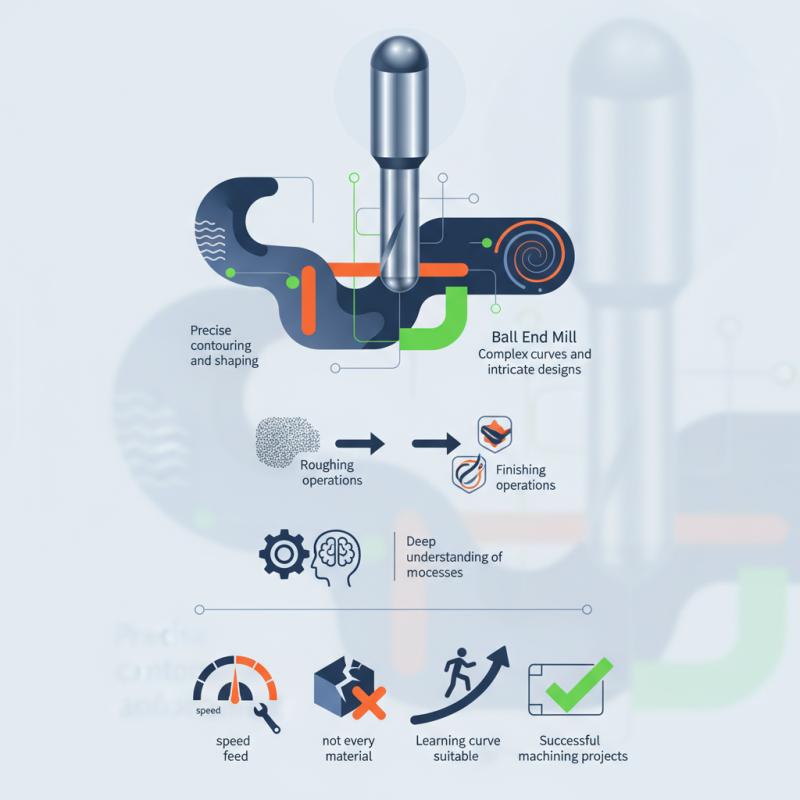
A Ball End Mill is a cutting tool used in machining. It features a rounded end that allows for precise contouring and shaping of materials. These mills are ideal for creating complex curves and intricate designs.
In machining, the Ball End Mill offers versatility. It can be used for finishing and roughing operations. This makes it a popular choice in manufacturing industries. The ability to produce smooth, rounded edges is essential for many applications. However, using a Ball End Mill requires a deep understanding of machining processes.
Choosing the right speed and feed is crucial. Some operators may struggle with these settings, leading to tool wear. Additionally, not every material is suitable for this type of milling. There is a learning curve involved in mastering its use. Awareness of these factors is vital for successful machining projects.
What is a Ball End Mill?
A ball end mill is a specialized cutting tool used in machining. Its rounded end allows for unique shapes and contours in materials. This tool is primarily designed for milling operations where intricate designs are needed. The ball shape enables smooth cuts and fine details, especially in 3D surfaces.
When using a ball end mill, one must consider several factors. The depth of cut and feed rate affect the quality of the finished surface. If not adjusted properly, it could lead to poor results. Sometimes, machinists overlook the importance of tool wear. Dull tools can ruin the precision needed for specific tasks, leading to frustrating errors.
Moreover, matching the right speed to the material is crucial. Using a ball end mill on hard materials requires careful attention to prevent breakage. Dealing with different materials can be challenging, often demanding a learning curve. The ball end mill is versatile, but it does require skill to harness its full potential effectively.
Design and Features of Ball End Mills
Ball end mills are specialized cutting tools widely used in machining. Their unique design features a hemispherical tip, which allows for intricate shapes and contours to be milled into various materials. This is particularly useful for creating complex profiles, slots, and recessed surfaces. The ball shape helps in achieving smooth finishing and precise dimensional accuracy.
When choosing a ball end mill, consider the diameter and flute design. Larger diameters can remove more material but may be less precise for detailed work. Flute count affects chip removal efficiency. Fewer flutes provide better chip clearance, whereas more flutes offer a finer finish. It's crucial to match the tool to the specific application to ensure optimal performance.
Tips: Always ensure proper tool speed and feed rate. This prevents damage and enhances tool life. Regularly inspect the cutting edges for wear. A worn tool can lead to inaccuracies and surface defects. Take time to assess your tooling choices. Sometimes, trying different setups can reveal better results.
Ball End Mill Usage in Different Materials
This chart illustrates the cutting speeds of ball end mills when machining different materials. As depicted, aluminum allows for the highest cutting speed, while titanium shows a significantly lower cutting speed requirement. Understanding these speeds is crucial for optimizing machining processes.
Applications of Ball End Mills in Machining
Ball end mills are essential tools in machining, widely used for creating curved and contoured surfaces. Their design allows for precise cutting in various materials. According to a report by the Global Cutting Tools Market, the demand for ball end mills is projected to grow at a CAGR of 4.5% between 2023 and 2028. This growth is driven by their applications in industries like aerospace and automotive.
In aerospace, ball end mills are preferred for machining complex geometries. They excel in contouring and are vital for components such as turbine blades. In the automotive sector, manufacturers use them for producing intricate parts, improving efficiency and product quality. These tools enhance machining precision but can suffer from wear and tear, affecting performance. Proper tooling and maintenance are crucial to mitigate these challenges.
It's important to note that while ball end mills are versatile, their effectiveness can vary depending on material and cutting speed. Some operators report difficulties in achieving consistent finishes. The learning curve can be steep for new users. Regular training and adjustments to machining parameters can help these users adapt, enhancing both safety and productivity in the long run.
Advantages of Using Ball End Mills
Ball end mills offer unique advantages in machining, primarily due to their spherical shape. This design allows for smooth contouring of complex shapes, which is vital in industries like aerospace and automotive. According to a recent industry report, the demand for ball end mills has surged by 15% over the last five years, reflecting their essential role in producing intricate geometries.
One significant benefit of using ball end mills is their ability to create curved surfaces. They excel in 3D machining operations, often achieving finer details compared to flat end mills. In fact, studies indicate that using a ball end mill can improve surface finish by up to 30%. This capability is particularly beneficial in mold-making and die industries, where precision is paramount.
However, it's essential to note that ball end mills necessitate specific machining conditions. They can generate higher heat due to their cutting action, which may require optimal cooling strategies. Additionally, users may struggle with tool wear if not closely monitored. Hence, while ball end mills offer many advantages, they also present challenges that must be managed effectively.
Tips for Choosing the Right Ball End Mill for Your Project
When selecting a ball end mill, consider the specific requirements of your machining project. Ball end mills are versatile tools ideal for producing curved surfaces and intricate shapes. They excel in 3D contouring and can achieve smooth finishes.
Choose the right diameter for your needs. Smaller diameters are excellent for tight corners, while larger ones suit broader surfaces. Also, think about the material being machined. Harder materials require different flute designs and coatings.
Pay attention to the number of flutes. More flutes increase the tool’s strength, but may not clear chips effectively. Also, think about the tool’s length. Longer tools can reach deeper areas but may sacrifice rigidity. Balancing these factors is crucial to achieving optimal results. You might encounter challenges, but reflecting on your choices can lead to improved outcomes.