Blog

How to Choose the Best UV Board for Your Business in 2026?

Choosing the right UV Board in 2026 starts with the job it must do, not the gloss on a sample. Will it face sunlight, moisture, frequent cleaning, or only indoor display? A board that looks crisp beneath showroom lights may warp near a sunny window. Small details matter: panel thickness, surface finish, print adhesion, and edge quality can change installation time and long-term appearance.

For transparency, this illustrative quotation is fictional and should not be attributed to a real specialist: “A good UV Board is the one that still performs where your customers actually use it.” — Maya Chen, fictional UV materials adviser. Treat that as a selection principle, not a verified industry quotation. Ask suppliers for technical data, sample panels, and application-specific guidance. Then test the board using your own ink, mounting method, and cleaning routine. A small trial can reveal issues a brochure cannot.

Price still matters. So does consistency between batches. But the cheapest panel may cost more if it chips during cutting or needs early replacement. I would not choose from a photograph alone; I have seen attractive samples hide practical weaknesses. This guide compares key board types, finishes, performance factors, and supplier questions, helping businesses make a measured choice. Not every specification will be perfectly clear. That is a reason to ask more questions before ordering, not to guess.
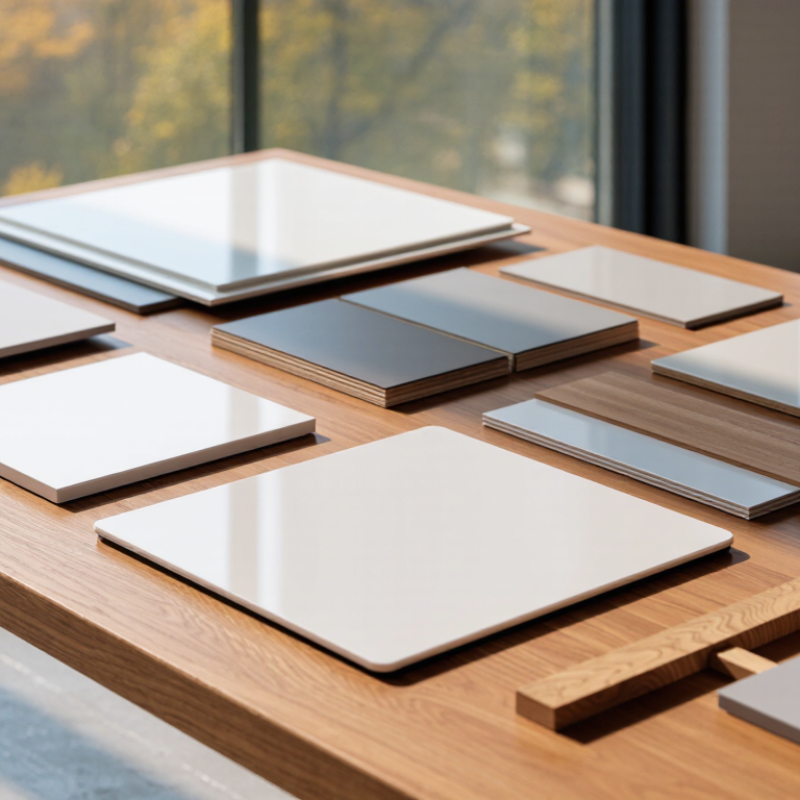
How to Choose the Best UV Board for Your Business in 2026?

Understand What UV Boards Are and How Businesses Use Them

UV boards are panels finished with a coating cured by ultraviolet light. Their core can be MDF, PVC, acrylic, or another material, so “UV board” does not describe one fixed product. The coating may provide a smooth, glossy surface with consistent color. Performance still depends on the core, coating thickness, and edge treatment. The label can mislead.

Businesses use UV boards for shop displays, wall panels, reception counters, cabinet fronts, and indoor signs. A bright finish can make product colors stand out beneath retail lighting. In a busy café, however, fingerprints and scratches may show more clearly on glossy surfaces. A matte finish may suit that setting better. Not every board handles moisture, heat, or outdoor exposure equally well.

Choose a board by matching it to its job. Check the panel thickness, surface durability, and recommended cleaning method. Ask for technical specifications, especially when the board will face regular handling. View a sample under the lighting used at your premises. It may look different there. Also inspect a cut edge; a neat face can hide a fragile core. A small trial installation is useful, though it takes extra time. That effort can reveal problems before a large order is made.

Define Your Project Needs, Environment, and Performance Requirements

A UV board should be chosen for the work it must do, not just its color or price. Define the project before comparing panels. Will it become a cabinet door, a shop counter, or a wall finish? Each use brings different demands for surface hardness, thickness, edge quality, and cleaning. Small details matter. A glossy finish may show fingerprints under bright showroom lights, while a textured surface can be harder to wipe clean. Check the board’s technical data for the substrate, coating, dimensions, and recommended use. If the supplier’s information is unclear, ask for clarification rather than assuming all UV boards perform alike.

The installation environment matters just as much. Note exposure to sunlight, humidity, heat, spills, and frequent contact. A board used near a sunny window may need better resistance to fading; a busy counter needs a surface that tolerates routine cleaning and abrasion. Test it first. Request a physical sample and inspect it under the lighting used at the site. Wipe it with the intended cleaner, and check the edges after cutting. Also confirm how the board should be stored and installed. These checks take time, and they will not predict every failure. Still, comparing real samples against written performance requirements can prevent an attractive panel from becoming the wrong choice for daily use.

Compare Board Materials, Thicknesses, Finishes, and Printing Quality

Choosing a UV board starts with the job, not the finish. For indoor signs, MDF offers a smooth face for fine text; PVC foam board is lighter and resists moisture better, but can dent under pressure. The USDA Forest Products Laboratory’s Wood Handbook reports MDF densities of roughly 0.5–0.8 g/cm³, so weight and stiffness can vary noticeably between panels. Check the actual sheet, not just its label. A 3 mm panel may flex across a wide display, while 6–10 mm stock usually feels more stable. Still, thicker is not always better.

Finish changes the result. A matte surface cuts glare under shop lights; gloss makes colors look vivid but shows fingerprints and surface scratches. Before ordering, print a small test with fine type, a skin-tone image, and a solid dark area. Look for banding, blurred edges, and uneven white ink. ASTM D1037 outlines tests for properties such as bending and moisture response in wood-based panels; ask suppliers for relevant test data when MDF is under consideration. For other materials, request matching specifications. FESPA’s 2023 Print Census reflects a diverse print market, so one substrate rarely suits every application. A little awkward, perhaps, but sample testing beats guessing. Check thickness, flatness, and ink adhesion after curing, then compare costs per usable panel—not per sheet.

Assess Supplier Reliability, Total Cost, and 2026 Compliance Needs

Choosing a UV board supplier in 2026 means checking more than a polished sample. Ask for recent production samples, written specifications, and clear records of coating, thickness, and tolerances. Compare those details with the boards delivered, not just the catalogue image. Ask for proof.

Reliability shows up in ordinary moments. Does the supplier answer technical questions promptly? Can they explain how they handle damaged sheets, production delays, or batch differences? Request references from customers with similar uses, and confirm realistic lead times in writing. A confident sales pitch is not a quality check. I’d also inspect a cut edge and a drilled area; surface gloss can distract from chipping or uneven bonding.

Calculate total cost per usable sheet, including shipping, protective packaging, expected waste, storage, and replacement delays. A lower quote may become expensive if panels arrive scratched or vary in size. Compliance needs can differ by destination and application, so ask for current test reports and material documentation relevant to your market. Verify their scope and dates, and check requirements with a qualified local professional. Paperwork can look complete while missing one detail. I sometimes focus too much on price; that shortcut deserves a second look.

How to Choose the Best UV Board for Your Business in 2026? - Assess Supplier Reliability, Total Cost, and 2026 Compliance Needs

Buyer scorecard: Use the recommended weights below to compare shortlisted suppliers. Score each item from 1 (inadequate or undocumented) to 5 (verified and consistently meets requirements); multiply the score by its weight to calculate a weighted result.

Decision Area Evaluation Dimension Evidence or Data to Request Recommended Weight What a Strong Result Looks Like
Supplier reliability On-time, complete delivery rate Monthly delivery records for the previous 12 months; agreed delivery dates and quantities; explanation of delays or shortages. 15% Records are documented, recent, and consistent with your required lead time and order volumes.
Supplier reliability Quality consistency and traceability Product specification, batch or lot identification, inspection records, defect and return history, and corrective-action process. 15% Each shipment can be traced to a production lot, and defects are investigated with documented corrective actions.
Supplier reliability Production capacity and continuity Written capacity and lead-time commitments, backup production or material plans, and escalation contacts. 10% Capacity is confirmed for forecast demand, with a clear plan for disruption or urgent replenishment.
Product suitability Substrate, thickness, dimensions, and finish Technical data sheet; substrate type (such as MDF, particleboard, or plywood); thickness and size tolerances; UV finish description; sample panel. 12% The documented construction and tolerances match the intended use, machining process, and installation conditions.
Product suitability Performance for intended use Relevant test reports for scratch, abrasion, stain, moisture, color, or adhesion performance; test method and test conditions. 10% Performance is verified using methods and conditions appropriate to the application; results are not presented without test context.
Total cost Landed cost per usable panel or area Item price, freight, insurance, duties, handling, packaging, and the quantity of saleable material received. 12% Quotes use the same specification and delivery terms, and cost is compared per usable panel or square metre—not price alone.
Total cost Waste, rework, and lifecycle costs Expected cutting yield, damage rate, installation or finishing requirements, maintenance needs, and replacement assumptions. 10% The comparison includes material loss and downstream costs as well as the purchase price.
2026 compliance Destination-market and material compliance Declarations and supporting reports relevant to the destination market and intended use. For regulated composite-wood products in the United States, check applicable TSCA Title VI requirements; for applicable EU products, assess REACH obligations. RoHS applies when the product is within the scope of relevant electrical and electronic equipment rules. 8% Documents identify the product and covered material, are current and traceable, and match the applicable market and use. Requirements are verified for each destination rather than assumed universal.
2026 compliance Emissions, chemical, and claims documentation Where applicable, formaldehyde emissions documentation, chemical declarations, safety information, and substantiation for environmental or performance claims. 5% Claims are supported by suitable documentation; the supplier identifies limitations and does not treat a voluntary certificate as proof of every legal requirement.
Commercial fit Minimum order, payment, and change control Minimum order quantity, payment terms, price validity, specification-change notification process, and written warranty terms. 3% Terms are transparent and workable for the buyer’s order pattern, cash flow, and product approval process.
Total weight: 100%. Weighted result = sum of (criterion score ÷ 5 × criterion weight). Compare suppliers only after confirming they meet mandatory product and legal requirements. For total cost, use: purchase price + freight + duties + handling + expected waste/rework + other relevant ownership costs. Confirm current requirements with the appropriate regulatory authority or qualified adviser for each market and application.

Test Samples and Select the Best UV Board for Your Business

Choosing a UV board from a specification sheet alone is risky. Request samples in the exact thickness, finish, and color you expect to order. Print each using your normal ink, curing settings, and finishing steps. FESPA’s 2023 Print Census reported that 83% of surveyed printers expected business growth. That outlook makes repeatable quality worth testing before scaling up. Still, growth forecasts cannot tell you which board suits your workflow.

Inspect the sample under the lighting your customers will use. Check fine text, solid-color coverage, edge chipping, and surface scratches. Rub a printed area after curing, then test adhesion with your usual finishing process. If boards may face moisture or heat, expose samples to those conditions too. Keep one untreated sample for comparison. A polished sample can still mislead. Record the board thickness, print settings, and test results; repeat the run on another day to spot variation. The best option is not always the smoothest or cheapest. It is the board that performs consistently, fits your production limits, and looks right in the final setting. One test may not be enough. Judge the evidence, not the first impression.

How to Choose the Best UV Board for Your Business in 2026

Compare test samples across practical selection criteria before placing a bulk order.

How to use this chart: These illustrative scores are not verified product data. Test your own samples under the same conditions, score each criterion consistently, and replace the example values with your measured results. Check print adhesion, scratch resistance, water resistance, color consistency, and cost per usable panel.