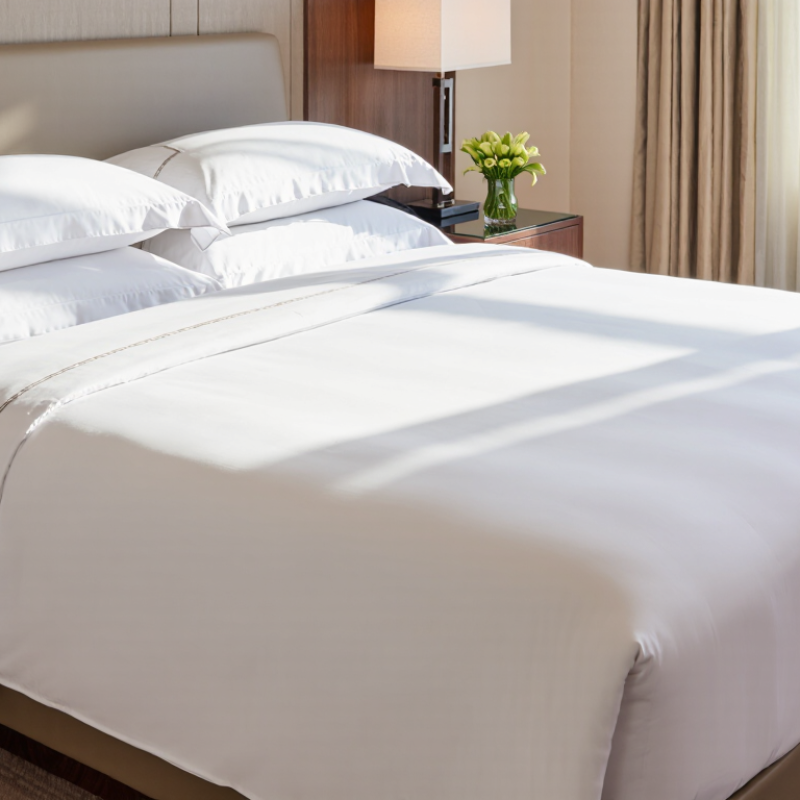
| Fabric Comparison |
| 100% Cotton | Natural cellulose fiber; absorbs moisture and becomes softer with washing. | Generally breathable, with a comfortable feel across different seasons. | Usually machine washable. May wrinkle and can shrink if washed or dried at high temperatures. | Everyday bedding, warm climates, and guests who prefer natural fibers. | Check the cotton type, fabric weight, finishing process, and wash-care instructions rather than relying on thread count alone. |
| Long-Staple Cotton | Uses longer cotton fibers that can produce smoother, stronger yarns with fewer fiber ends. | Smooth, soft, and breathable when woven into a quality fabric. | Can offer good abrasion resistance, but performance still depends on yarn quality and finishing. | Premium hospitality use and sleepers seeking a smoother sheet. | Look for reliable fiber and construction information; a high thread count does not automatically indicate higher quality. |
| Polyester | Synthetic fiber known for strength, dimensional stability, and low wrinkling. | Often less absorbent than cotton and may feel warmer, especially in humid conditions. | Dries quickly, resists shrinking, and generally withstands frequent laundering. | High-turnover rooms, budget-focused sets, and easy-care applications. | Useful where quick drying and wrinkle resistance are priorities; check heat instructions because excessive heat can damage synthetic fibers. |
| Cotton-Polyester Blend | Combines cotton’s moisture absorption with polyester’s strength and easy care. | Moderately breathable; the balance depends on the fiber ratio and weave. | Usually wrinkles and shrinks less than pure cotton and dries faster. | Hotels, rental properties, and households requiring frequent washing. | Compare the blend ratio. More cotton generally gives a more natural feel, while more polyester usually improves durability and wrinkle resistance. |
| Linen | Made from flax fibers; naturally textured and highly absorbent. | Very breathable and comfortable in warm or humid weather; softens with use. | Strong fiber but prone to wrinkles. Requires careful laundering and may need a lower-heat drying cycle. | Warm climates, relaxed interiors, and guests who appreciate a textured natural fabric. | Expect a deliberately casual appearance. Check whether the product is stone-washed or blended if a softer, less-crinkled finish is preferred. |
| Bamboo-Derived Rayon | Regenerated cellulose fiber made from bamboo-derived cellulose; often marketed for its smooth hand. | Soft and generally moisture-absorbent, although breathability varies by construction. | Follow care instructions carefully because some rayon fabrics can weaken when wet or exposed to high heat. | Sleepers seeking a smooth, fluid drape and soft surface. | Verify the actual fiber labeling and care requirements; “bamboo” does not mean the sheet is made from untreated bamboo fiber. |
| Tencel-Type Lyocell | Regenerated cellulose fiber with a smooth surface and consistent filament structure. | Soft, smooth, and moisture-managing; commonly chosen for a cool, sleek hand. | Generally requires gentle washing and moderate drying temperatures to preserve the surface. | Warm sleepers and users who prefer a smooth, low-friction fabric. | Check the fiber label and laundering instructions because softness and performance depend on the blend and finish. |
| Common Sheet Weaves |
| Percale | Plain one-yarn-over and one-yarn-under construction; traditionally associated with a crisp hand. | Light, breathable, and cool-feeling with a matte appearance. | Suitable for regular laundering; may wrinkle more than sateen. | Hot sleepers, summer use, and classic hotel-style bedding. | Choose percale when airflow and a crisp finish matter more than a silky drape. |
| Sateen | Uses a higher proportion of yarn floats on the surface, creating a smoother, subtly lustrous finish. | Softer, silkier, and typically warmer-feeling than percale. | Can show surface wear or pulls more readily than a simple plain weave if handled roughly. | Cool rooms, colder seasons, and sleepers who prefer a smooth drape. | Choose sateen for softness and warmth; inspect the fabric weight and finishing quality to avoid an overly heavy feel. |
| Jersey Knit | Stretchable knitted construction rather than a woven structure; commonly made from cotton or blends. | Soft, flexible, and T-shirt-like, with a relaxed drape. | Usually easy to fit and wash, but may pill or lose shape depending on fiber and finishing. | Casual bedrooms, adjustable mattresses, and users who prefer a stretchy fitted sheet. | Check elastic quality, fabric weight, and pilling resistance when selecting for frequent use. |
| Matelassé or Textured Weave | Raised or patterned surface that adds visual texture and dimension. | Feel varies from crisp to plush depending on the construction. | Texture can require gentler care and may make ironing impractical. | Decorative top layers, boutique-style rooms, and layered bedding. | Usually better suited to a coverlet or decorative layer than to a close-contact sleeping sheet. |
| Recommended Fabric Weight and Thread Count Guidance |
| Lightweight Sheet | Approximately 90–120 GSM, depending on fiber and weave. | Airy and quick-drying; typically cooler in warm conditions. | May feel less substantial and can wear faster if the construction is weak. | Summer, humid climates, and rapid laundry cycles. | Prioritize even stitching, secure hems, and a suitable fiber blend over a high thread-count claim. |
| Midweight Sheet | Approximately 120–170 GSM, with substantial variation by material and weave. | Balanced comfort, durability, and breathability. | Practical for year-round use and routine commercial laundering. | Most bedrooms and general-purpose hotel bedding. | A dependable choice when the room climate and guest preferences vary. |
| Heavyweight Sheet | Typically above 170 GSM, although the exact feel depends on construction. | More substantial and potentially warmer, with a denser hand. | May take longer to dry and can require more drying energy. | Cool climates, winter bedding, and users who prefer a weightier feel. | Confirm that the mattress, laundry equipment, and drying time can accommodate the extra weight. |
| Thread Count | Number of threads woven into one square inch, normally reported as warp and weft threads combined. | Does not directly determine softness, breathability, or durability. | Very high advertised counts may use multi-ply yarns and should be assessed alongside fiber quality and weave. | Useful as one comparison point among similar fabrics and constructions. | Use thread count with fiber type, yarn quality, weave, fabric weight, and finishing—not as the sole quality measure. |
| Standard Mattress and Sheet Size Guide |
| Twin / Single | Mattress: approximately 38 × 75 in (97 × 191 cm). | Typical flat sheet: approximately 66 × 96 in (168 × 244 cm). | Typical fitted-sheet pocket: select for the exact mattress depth, commonly 8–14 in (20–36 cm). | Single beds and compact guest rooms. | Measure mattress width, length, and depth, including any topper. |
| Full / Double | Mattress: approximately 54 × 75 in (137 × 191 cm). | Typical flat sheet: approximately 81 × 96 in (206 × 244 cm). | Typical fitted-sheet pocket: commonly 8–14 in (20–36 cm). | One larger sleeper or two sleepers with limited space. | Check whether the fitted sheet is labeled for Full, Double, or both because regional naming varies. |
| Queen | Mattress: approximately 60 × 80 in (152 × 203 cm). | Typical flat sheet: approximately 90 × 102 in (229 × 259 cm). | Typical fitted-sheet pocket: commonly 10–16 in (25–41 cm). | Most common choice for two sleepers and standard guest rooms. | Measure the mattress and topper together; a pocket that is too shallow can pull off during use. |
| King | Mattress: approximately 76 × 80 in (193 × 203 cm). | Typical flat sheet: approximately 108 × 102 in (274 × 259 cm). | Typical fitted-sheet pocket: commonly 10–16 in (25–41 cm). | Spacious rooms and two sleepers who want more surface area. | Confirm the regional standard because King dimensions differ between countries. |
| California King | Mattress: approximately 72 × 84 in (183 × 213 cm). | Typical flat sheet: approximately 108 × 102 in (274 × 259 cm), depending on the set. | Typical fitted-sheet pocket: commonly 10–16 in (25–41 cm). | Tall sleepers or rooms designed for a longer mattress. | Do not substitute a standard King fitted sheet; the width and length are different. |
| Hotel-Style Deep Mattress | Any standard mattress with a thick topper, pillow top, or total depth above the fitted sheet’s pocket. | Flat sheet dimensions should provide enough side and foot drop for secure tucking. | Choose a pocket at least 1–2 in (2.5–5 cm) deeper than the measured mattress and topper depth. | High-profile beds and layered mattresses. | Measure after all mattress pads and protectors are installed; deep-pocket labels are not standardized across all manufacturers. |
| Practical Buying Checklist |
| Climate | Warm or humid rooms generally benefit from breathable, moisture-absorbing materials and lighter constructions. | Cool rooms may suit sateen, heavier cotton, or blended fabrics. | Consider drying time if the sheets will be laundered frequently. | Match the fabric to the room’s temperature and humidity. | For variable climates, a midweight cotton or cotton-polyester set is a versatile option. |
| Mattress Fit | Correct dimensions prevent bunching, exposed mattress edges, and fitted-sheet removal. | Fitted sheets need adequate pocket depth and strong elastic. | Oversized flat sheets provide more room for tucking but may require additional folding. | All mattress types, especially pillow-top and topper combinations. | Measure width × length × total depth before purchase and confirm the size label’s regional standard. |
| Commercial Laundering | Frequent washing favors durable yarns, secure hems, colorfast dyes, and easy-care fibers. | Blends and polyester generally dry faster and wrinkle less than pure linen or cotton. | Avoid excessive heat unless the care label permits it; high heat can cause shrinkage or fiber damage. | Hotels, vacation rentals, healthcare settings, and busy households. | Review wash temperature, tumble-dry limits, bleaching guidance, and expected replacement frequency. |
| Comfort Preference | Percale tends to feel crisp and cool; sateen tends to feel smooth and warm; jersey feels flexible and casual. | Natural fibers often provide a more breathable hand, while synthetics emphasize durability and easy care. | Surface finishes can change the initial feel and may soften or change after laundering. | Different sleeper preferences and room styles. | Choose based on tactile preference, climate, and maintenance requirements rather than appearance alone. |