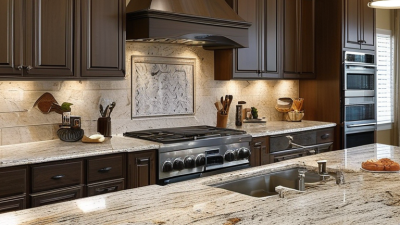
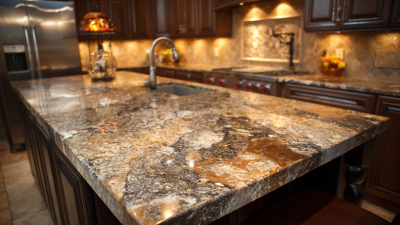
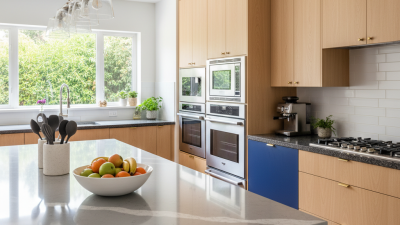
Granite Counter Tops remain a practical choice for homeowners who want natural character and dependable performance. Each slab forms through geological pressure, so no two surfaces look exactly alike. You may see black mineral flecks, pale veins, or warm brown movement beneath the polish. That variation gives a kitchen a genuine, less manufactured appearance. It also creates a planning challenge. Matching two slabs can be difficult.
Industry guidance supports careful evaluation rather than automatic selection. The Natural Stone Institute’s Dimension Stone Design Manual identifies granite as a suitable material for demanding interior applications when fabrication and installation follow professional standards. ASTM C615 also defines quality requirements for granite dimension stone. These references matter because durability depends on more than the stone itself. Cabinet support, seam placement, edge design, and sealing can influence daily performance.
Home renovation research reinforces this practical perspective. The 2024 U.S. Houzz Kitchen Trends Study reports that homeowners continue investing in durable surfaces and functional kitchen upgrades. Granite can tolerate normal heat exposure, resist many scratches, and handle frequent meal preparation. Still, it is not indestructible. A dropped cast-iron pan may chip an edge. Acidic spills can dull poorly protected surfaces. Dark colors may reveal crumbs quickly. That is easy to overlook.
Choosing Granite Counter Tops therefore involves both design and maintenance. Ask fabricators about the slab’s origin, thickness, finish, seam locations, and recommended sealer. Request a full-size sample when possible. View it beside cabinet doors and natural light. Professional installation improves reliability, but everyday care remains essential. Granite may not suit every budget or style. Its strongest advantage is balance: natural beauty, long service potential, and a surface that can feel distinctive every morning.
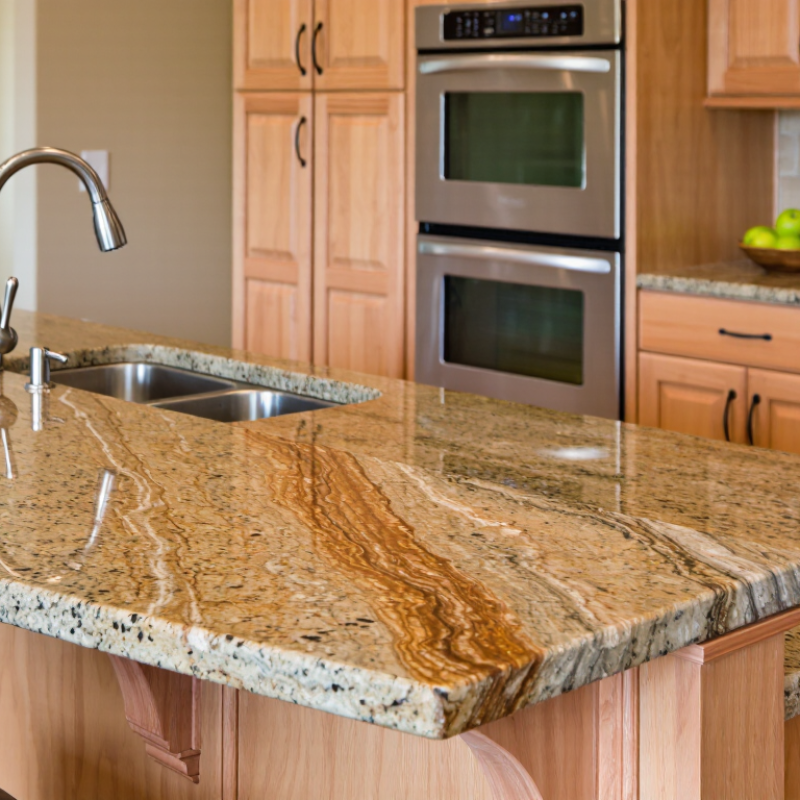
Granite countertops are work surfaces cut from large slabs of natural stone. Granite forms when molten rock cools deep underground. Each slab contains a different mineral pattern, so no two counters look exactly alike. You may notice tiny crystals, dark veins, or uneven color near the sink. That variation is part of the material’s character. It can also complicate matching repairs.
The Natural Stone Institute’s Dimension Stone Design Manual lists typical granite density at about 2,600–2,800 kilograms per cubic meter. It also notes that many commercial granites have water absorption below 0.4%, although testing results vary by quarry and stone type. ASTM C97 testing helps fabricators evaluate absorption and density. These figures support granite’s durable reputation, but they do not make every slab maintenance-free. Retail labels can also be imperfect. Some stones sold as “granite” are geologically different materials.
Tips:
Request the slab’s technical test results before purchase. View the actual slab, not only a small sample. Check its edges, seams, and cutout areas under bright light. A qualified installer should inspect cabinet support and wall levels first. Sealers may reduce staining, but they cannot prevent every mark. Wipe coffee, oil, and acidic liquids quickly. Use a cutting board. Granite resists scratches well, yet heavy impact can still chip an exposed corner. The National Stone Institute recommends following the fabricator’s care instructions because porosity differs between stones.
Granite countertops begin deep beneath the earth’s surface. Molten rock cools slowly over thousands or millions of years. This gradual cooling creates large mineral crystals. Quartz, feldspar, and mica produce granite’s familiar colors and patterns. Each stone develops differently.
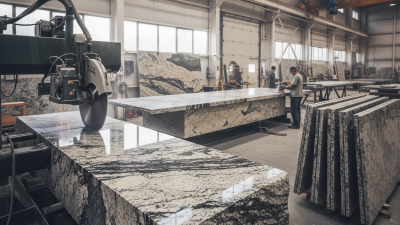
Quarry workers cut granite blocks from natural deposits using diamond-tipped wires and saws. Water cools the blades and limits airborne dust. Large blocks travel to a processing facility, where machines slice them into slabs. Polishing heads then move across the surface with finer abrasives. The final finish can feel glossy, honed, or slightly textured.
Fabricators inspect each slab for cracks, mineral movement, and thickness changes. They create a template from the kitchen or bathroom before cutting openings for sinks and cooktops. Skilled workers ease the edges and join sections with carefully matched adhesive. Sealing helps reduce staining, but it does not make granite maintenance-free. Wipe spills promptly, especially oil, wine, and acidic liquids. No slab is completely predictable. A vein may appear stronger after polishing than it looked in the rough block. That surprises some homeowners. It also makes every installed countertop slightly different. Good fabrication depends on accurate measurements, clean cuts, and patient inspection, not appearance alone.
Granite countertops are cut from natural igneous rock formed under intense heat. Each slab contains different minerals, veins, and small color shifts. No two surfaces look exactly alike. This variation gives a kitchen a tactile, genuine character that manufactured patterns can imitate but rarely duplicate.
Performance is a major advantage. ASTM C615 sets a maximum water-absorption limit of 0.40% for granite dimension stone, supporting its reputation as a dense countertop material.
Granite also resists everyday scratches, moderate heat, and heavy cookware better than many softer stones. A hot pan still deserves a trivet. Stone is strong, not invincible. The Natural Stone Institute advises selecting sealers according to the stone’s porosity and household use. A properly sealed surface can resist many common spills, including coffee and cooking oil.
Granite also offers practical design flexibility. It works with undermount sinks, broad islands, and slim backsplashes. Dark slabs can hide minor marks, while pale slabs make narrow rooms feel brighter.
The weakness is easy to overlook. Unsealed granite may absorb staining liquids, and seams remain visible on long islands. Installation quality matters greatly. I would inspect the slab in person, especially near the sink cutout, before approving fabrication. That small step prevents expensive disappointment.
What Are Granite Countertops and Why Choose Them?
Granite countertops are natural stone surfaces formed from cooled volcanic rock. Each slab contains different minerals, so no two installations look exactly alike. This variation gives kitchens a visual depth that manufactured surfaces may not provide. Popular styles include bold veining, fine speckles, and quiet, uniform patterns. Black, white, gray, beige, and green tones can support both modern and traditional interiors. View the full slab, not only a small sample. A sample can hide dramatic movement or unexpected color changes.
Finish changes the stone’s character. A polished finish reflects light and highlights mineral details, while a honed finish creates a soft, matte appearance. Leathered finishes add subtle texture and can make fingerprints less noticeable. Edge profiles also matter. A simple eased edge looks clean, while a rounded edge feels softer near busy walkways. From practical installation experience, lighting can alter the color more than expected. I once judged a gray slab under showroom lights, then found it looked warmer at home. That mistake still influences my recommendations.
Tips: Place samples beside cabinet doors and flooring. Check them in morning and evening light. Ask how the stone should be sealed and maintained. Wipe spills promptly, especially oils and acidic foods. Granite is durable, but it is not indestructible. Avoid assuming every dark slab needs identical care. Maintenance advice should match the stone’s porosity and finish.
Granite is a natural igneous stone commonly used for countertops because it offers high durability, distinctive mineral patterns, and a wide range of natural colors. The chart shows typical mineral composition ranges found in granite.
Quartz and feldspar create much of granite’s light gray, white, pink, or red appearance, while mica and amphibole commonly add black, brown, or green flecks. Popular surface finishes include polished for a glossy look, honed for a smooth matte appearance, and leathered for a softly textured surface. Mineral proportions vary naturally from one granite slab to another.
Composition values are generalized geological ranges shown as volume percentages; individual granite varieties may differ.
Granite countertops combine natural stone strength with distinct color and movement. Choosing one requires more than liking a showroom sample. View a full slab in daylight, because small samples can hide bold veining or uneven tones. Check the stone against your cabinets, flooring, and wall color. Bring home a sample if possible. It may reveal a problem later.
Ask the fabricator about thickness, edge profiles, seams, and support near sinks or overhangs. Experienced installers should inspect the slab for visible cracks, weak areas, and natural pits. These details are not always defects. They are part of the stone’s character, although some homeowners may find them inconvenient. A polished finish reflects light, while a honed finish feels softer and may show marks differently. I once assumed darker granite needed less care, but daily use proved that assumption wrong.
Clean the surface with warm water and a pH-neutral stone cleaner. Wipe coffee, oil, and tomato sauce quickly, especially on lighter granite. Use cutting boards and trivets under hot cookware. Granite resists heat, but sudden temperature changes can still create stress. Avoid vinegar, lemon juice, abrasive powders, and harsh scouring pads. They may dull the surface or weaken its protective sealer. Test sealing with a few drops of water. If the stone darkens quickly, consult a qualified stone professional about resealing. This test helps, but it is not a laboratory diagnosis. Regular inspection around sinks can catch moisture problems before they become expensive repairs.
| Data Dimension | Typical Granite Countertop Information | Why It Matters |
|---|---|---|
| Material Type | Natural igneous stone formed from slowly cooled magma, primarily containing quartz, feldspar, mica, and other minerals. | Each slab has a distinctive mineral pattern, color variation, and natural appearance. |
| Hardness | Most countertop granites measure approximately 6–7 on the Mohs hardness scale. | Granite is generally resistant to everyday scratching, although abrasive materials and unprotected edges can still cause damage. |
| Durability | A properly fabricated and maintained granite surface can remain functional for decades. | It is suitable for kitchens, bathrooms, vanities, and other high-use areas. |
| Heat Performance | Granite has good heat resistance and normally tolerates brief contact with warm cookware. | Use trivets for very hot pans because sudden temperature changes may contribute to cracking or thermal shock, especially near seams or edges. |
| Porosity | Porosity varies by stone; water absorption is commonly low but is not identical for every slab. | A more absorbent granite may require more frequent sealing to reduce staining and moisture penetration. |
| Common Thicknesses | Common slab thicknesses are approximately 2 cm and 3 cm, depending on local fabrication practices. | Thickness affects edge profiles, visual weight, installation requirements, and overall cost. |
| Appearance | Available in a wide range of neutral and colored backgrounds with speckled, veined, or movement-filled patterns. | Natural variation makes every slab unique, so viewing the actual slab is recommended before purchase. |
| Finish Options | Polished finishes are glossy and smooth; honed finishes are matte; leathered finishes have a textured surface. | The finish affects appearance, cleaning visibility, tactile feel, and how fingerprints or water spots appear. |
| Stain Resistance | Sealed granite generally resists common spills better than unsealed granite, but it is not completely stain-proof. | Wipe up coffee, wine, oil, acidic liquids, and strongly pigmented foods promptly. |
| Routine Cleaning | Use warm water with a pH-neutral stone cleaner or mild dish soap, then dry with a soft cloth. | Gentle cleaning helps preserve the finish and avoids residue buildup. |
| Products to Avoid | Avoid abrasive powders, scouring pads, strong acids, bleach-based products, and harsh alkaline cleaners unless specifically approved for the stone. | Unsuitable chemicals can dull the finish, weaken sealers, or damage nearby surfaces. |
| Sealing Frequency | Many granite countertops are resealed roughly every 1–3 years, but the correct interval depends on stone porosity, sealer type, and usage. | Test by placing a few drops of water on the surface; if the area darkens quickly, the countertop may need resealing. |
| Scratch Prevention | Granite is hard, but sand, grit, ceramic materials, and metal objects can still mark some finishes. | Use cutting boards, clean spills containing grit, and avoid dragging heavy objects across the surface. |
| Edge Protection | Exposed corners and narrow overhangs are more vulnerable to chipping than broad, supported areas. | Choose a suitable edge profile and avoid impacts from cookware or heavy appliances. |
| Installation Considerations | Granite is heavy and requires accurate measurements, strong cabinet support, professional cutting, and careful seam placement. | Proper installation reduces the risk of cracking, uneven support, visible seams, and damage during handling. |
| Main Advantages | Natural appearance, high durability, good heat resistance, broad design variety, and long service life. | Granite is a strong choice for homeowners who want a natural stone surface with substantial everyday performance. |
| Main Limitations | It is heavy, can chip or crack from severe impact, may require periodic sealing, and has natural color variation. | Confirm maintenance expectations, slab availability, support requirements, and the exact pattern before ordering. |